What am I really good at ? I am a person who works hard and energetic, self-motivated, trustworthy, and responsible. I work well in teams and can adjust to any difficult circumstances.
What differentiates me from other designers? My way of thinking is distinctive, and I always finish what I start.
Which UX activities do I really like to do? I enjoy producing designs that are easy to grasp and everyone can find comfortable.
On which projects did I bring the most value? Books, magazines, newspapers, and other publications.
From which projects did I learn the most? I gained the most knowledge from assignments involving typography design.
What exciting stories can I tell about the work that I did? The most interesting stories I can tell are, about researching process for magazines and design due to their sources.
Task 3
Case study project ‘Illusion’ Art Journal
Introduction Scenario – Scenario: The first challenge was to come up with a name for the magazine. I thought “ILLUSION” was the finest option. I wanted to select between reality and unreality, an abstract concept. I thought this name suited my goals quite nicely.
Problem – The issue that required a solution was how to present data and graphics in a way that was both easy to understand and interesting.
Goal – The purpose of this article is to inform readers about the artists who have had the greatest global impact on the development of art and whose styles and creations are most recognized by contemporary audiences, and to provide examples and evidence of their work.
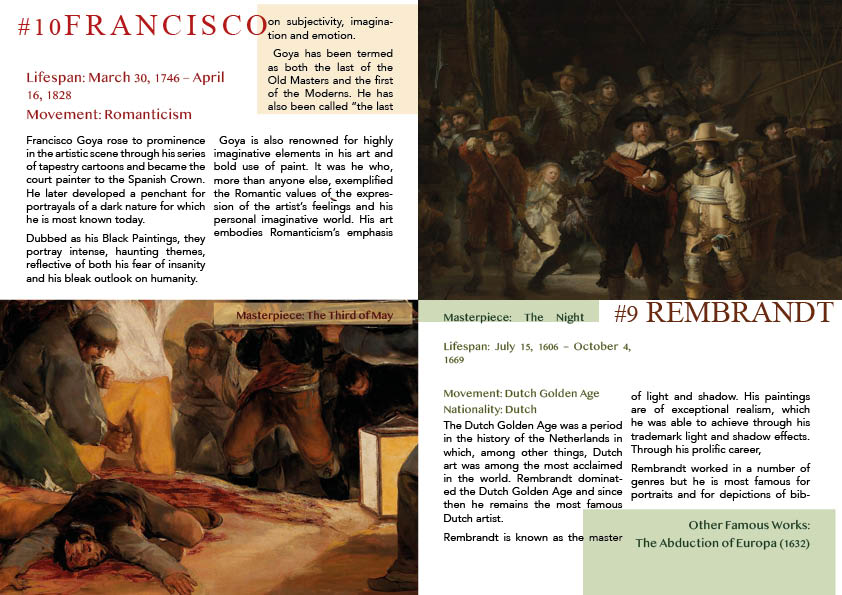
Your role in the project Designing the front cover, content pages, and rear page of a magazine, as well as its graphic layout. Putting photographs in a pleasing order to produce a finished product that appeals to the target market.
Who are the users Anyone with an interest in art, art history, especially young designers and painters. To learn about the inspirations behind and life stories of other artists. Read the language that authors and artists use to describe their creations.
Design Process – Selecting a title for the project – Designing the front and back covers, contents page, and last page – Choose typographic fonts, contrast, balance, hierarchy, rhythm, pattern, white space, movement, variety, and unity, and develop layouts for text and images. – Combining everything. – Checking if everything worked well
What tools did you apply in this project? The tools applied were Adobe InDesign, texts and image.
Research I’ll start by asking, “What key aspects belong on a magazine cover?” The goal of an art magazine Name of the artist, examples of the artist’s work, information about the artist, and a commentary that is specific to the student should all be included on one page. How did I decide on it? How does it connect to the subject or notion they are looking into? I studied and borrowed from the artists whose work I most respect to come up with fresh ideas. I was strongly affected and motivated to get the same outcomes. I toured galleries, crawled Instagram, and bought magazines and books about art.
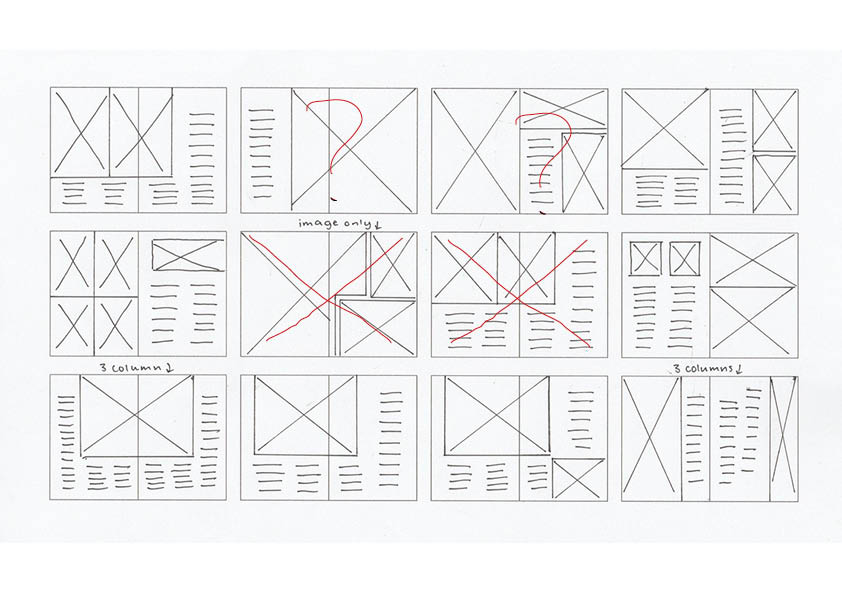
Sketches, wireframes, graphics, prototype Before deciding on the final layout, some sketches were updated.
Results and takeaways from a Usability test/before and after applying UX Design to the product The most important changes happened. Earlier, it was hard to figure out and connect text to images. After, layout is clear, with content that is simple to read and understand.
Your final design — style guide The style guide consists of reading details about a particular subject and reviewing images.
Conclusion / The impact It was an amazing project. I thoroughly enjoyed working on it because it was both fascinating and educational.
What did you learn from the project I’ve gained knowledge in the following areas: – How to design layouts – Working on texts and images – Consider other examples and evaluate your own in comparison with other people’s work
What would be the next steps The next steps involve studying additional journal layouts and developing more variations on different topics.